
HITRUST compliant, AI-based appeals, grievances and provider dispute platform
Make the buy versus build decision on operating reality, not build optimism.
For CIOs and IT leaders, the real decision is not whether workflows can be built. It is whether the organization wants to build and sustain the full operating layer around appeals, grievances, provider disputes, reporting, compliance change, workforce management, audit readiness, and AI-assisted operations.
Comparison levelCapability, governance, speed, TCO, resilience
What this avoidsEngineering blueprint detail and reverse-engineering clues
Why this mattersBuild burden usually expands after launch, not before it
What this page helps evaluate
Speed to value
Compliance resilience
Operational scalability
Total cost of ownership
AI readiness
Audit defensibility
Platform modelSaaS plus agentic augmentation on one operating layer
Business scopeAppeals, grievances, provider disputes, reporting, letters, workforce, audit
Governance lensSecurity posture, compliance upkeep, audit traceability, admin control
IT lensTime-to-value, integration readiness, sustainment burden, change resilience
Interactive executive asset
This version uses real product screenshots, interactive proof blocks, and a cleaner enterprise visual system so CIO and IT teams can assess maturity, breadth, and operating depth more credibly.
What IT leadership should evaluate
Business-critical outcomes, not just workflow coverage
The strongest buy versus build decisions are anchored in operating and governance outcomes that still matter long after go-live, speed, resilience, scale, total cost of ownership, AI readiness, and audit defensibility.
Outcome 01
Speed to value
Move faster than an internal build cycle and avoid spreading value realization across requirements, build, QA, pilot, hardening, and post-go-live fixes.
Outcome 02
Compliance resilience
Support regulatory and reporting change without forcing internal IT to become the long-term owner of every workflow and rules-driven enhancement.
Outcome 03
Operational scalability
Scale intake, routing, letters, reporting, and oversight without adding disconnected tools or manual workarounds across teams.
Outcome 04
Total cost of ownership
Look beyond build cost. Account for product ownership, admin burden, reporting upkeep, support, hosting, security, and enhancement demand.
Outcome 05
AI readiness
Adopt agentic augmentation where it adds value, without absorbing the full design, governance, testing, and sustainment burden internally.
Outcome 06
Reporting and audit defensibility
Give leadership, operations, compliance, and audit stakeholders a shared system of record with operational, management, and CMS-oriented reporting.
Interactive platform view
A cleaner, more executive way to show what the organization is actually buying
Use tabs to switch between the platform lens and the evaluation lens. This keeps the story at the capability layer rather than the engineering-recipe layer.
Member and provider experience platform
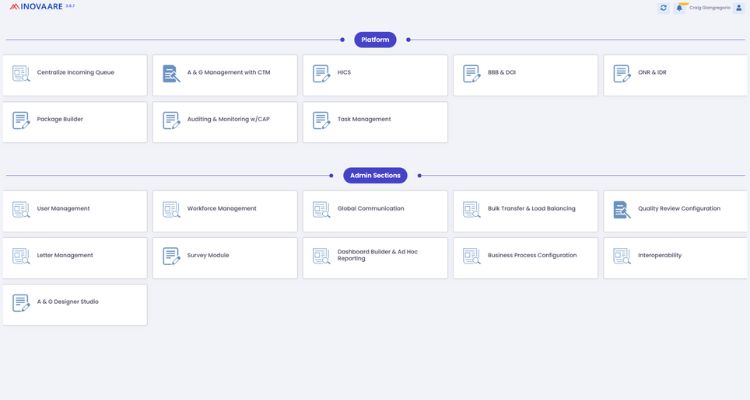
Unified platform combining SaaS execution, AI-based assistance, configurable operations, reporting depth, and governance support for payer A&G.
Member opsCore case operations and service execution
GRCCompliance alignment, auditability, and control
Delegation oversightOperational governance across stakeholders
Industry best-practice workflows
Appeals
Structured workflows aligned to mature payer operating needs across multiple appeal paths and packaging requirements.
Grievances
Purpose-built grievance processing with auditability, timeliness, and downstream reporting support.
CTM
Connected case handling for complaint and related member operations workflows.
Provider disputes and complaints
Unified handling model for provider-side issues, post-service complexity, and communication workflows.
Embedded applications
Package generator
Supports configured package generation for operational and regulatory needs without creating manual downstream work.
Auto-letter management
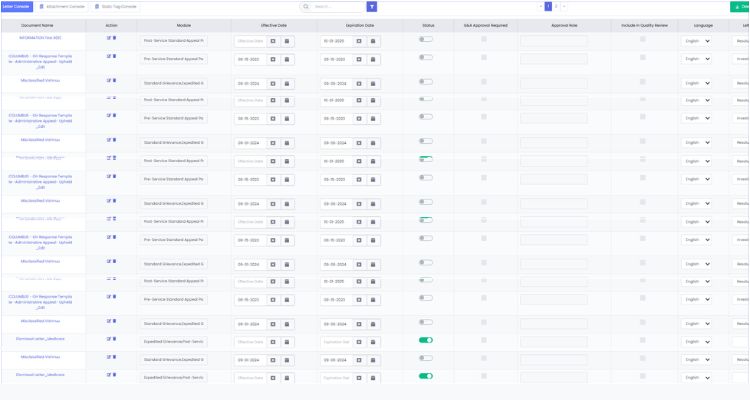
Centralized control over letters, attachments, approvals, alternate formats, withdrawals, and dismissals.
Workforce management
Routing, PTO-aware distribution, and workload balancing to improve throughput and reduce administrative drag.
Survey management
Post-case feedback workflows to support member experience visibility and service improvement.
Quality and control
Quality review auditing
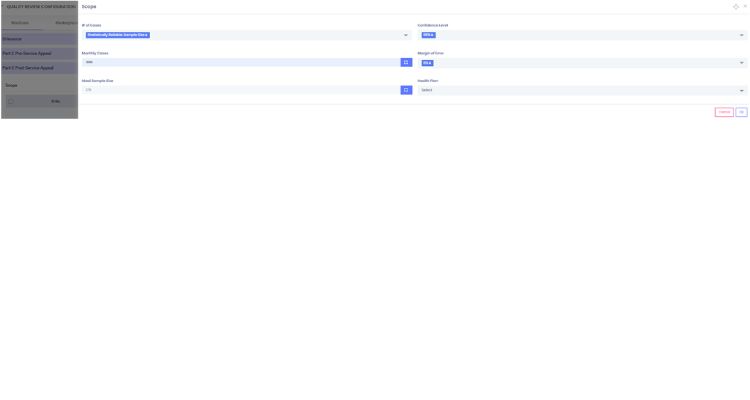
Pre-closure and retrospective review support with weighted evaluation logic and rebuttal process readiness.
Audit trails
Field-level change visibility, update history, user-level traceability, and historical comparison for defensibility.
Quality dashboards
Role-aligned views for intake coordinators, analysts, auditors, RNs, and MDs.
Auto-management
Automated alerts, prioritization, and receipt notifications to reduce follow-up friction across teams.
Analytics and reporting
CMS universes and scrubber support
Connected support for reporting-oriented operational readiness and downstream compliance workflows.
CMS Part C and D reporting
Supports HPMS-oriented submission and related reporting needs for grievance and appeals domains.
Operational dashboards
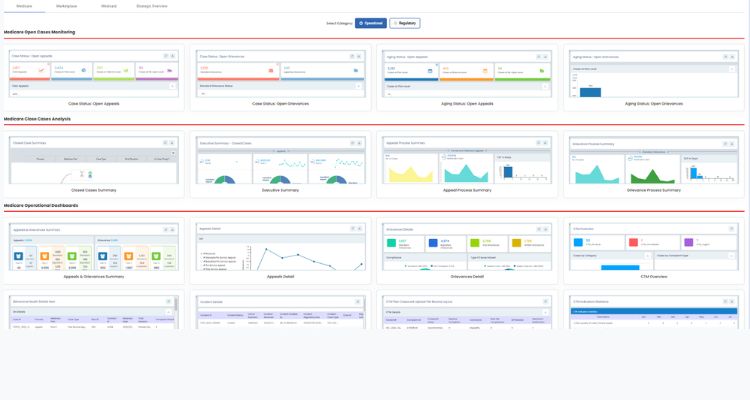
Executive, productivity, aging, bottleneck, forecasting, timeliness, and SLA-oriented visibility.
Designer Studio
Self-service dashboard and report builder for leadership and business users who need flexibility without constant IT dependence.
AI studio
AI intake agents
Assist intake-oriented work to reduce manual handling effort and improve front-end consistency.
AI investigation agents
Support case review and investigation work with faster issue assessment and operational assistance.
AI decision agents
Assist structured decision-support workflows while preserving governance and business oversight.
AI resolution agents
Support faster movement toward resolution where automation can create operating leverage.
Global communication
Document management
Task management
Bulk transfer & load balancing
Business process configuration
Interoperability
Compliance rules engine
In this model, the platform does not stop at case management. It extends into reporting, letters, quality, AI assistance, configuration, and compliance-aware operations, which is where many internal build programs become harder to sustain than initially expected.
Capability
Workflow coverage
Internal teams rarely stop at core case routing. Real-world maturity includes letters, quality, dashboards, administration, auditability, and reporting outputs.
Governance
Compliance upkeep
Regulatory change is not a one-time requirement. It becomes a sustained ownership model spanning business, compliance, and IT.
Scale
Operational control
Routing, workforce balancing, alerts, prioritization, and executive visibility become critical once volume and complexity rise.
Future readiness
Agentic augmentation
AI value is easier to realize when it is part of a governed platform rather than a separate internal experimentation track.
Executive comparison
Buy versus build, framed the way IT leadership actually has to live with it
The build path may be viable. The key question is whether the organization also wants to own long-term compliance upkeep, reporting depth, admin burden, AI evolution, and sustainment complexity.
Buy Inovaare
Adopt a mature platform and move faster toward operational value.
Workflow maturityPurpose-built operational coverage across appeals, grievances, CTM, and provider disputes on one platform.
Compliance upkeepPlatform-backed operating model for staying current without making internal IT the owner of every change cycle.
Reporting coverageOperational, management, dashboard, and CMS-oriented reporting on a connected foundation.
ConfigurabilitySupports business-led adaptation with less dependence on net-new engineering for each operational change.
Agentic augmentationAI-assisted operating leverage can be adopted as part of the platform, not as a separate design program.
Security and HITRUST postureEvaluated as part of a healthcare-grade operating platform, not as an afterthought added later.
Build internally
Possible, but heavier to govern, fund, and sustain over time.
Workflow design burdenInternal teams must define, refine, test, and continuously maintain workflow coverage as real-world complexity grows.
Compliance and reporting ownershipThe burden expands beyond case handling into rule updates, output accuracy, reporting logic, and audit defensibility.
Administrative overheadRole control, configuration layers, letters, quality review, monitoring, and support tooling often become separate workstreams.
AI readiness burdenMeaningful agentic capability adds governance, validation, tuning, and sustainment overhead.
Total cost of ownershipCost extends beyond build into product ownership, support, hosting, security posture, and specialized roles.
Execution riskThe harder part is usually not launch. It is sustaining quality, compliance, and agility after launch.
Interactive proof section
Clickable screenshots and proof blocks, built for executive review
Each card is clickable. Open any block to expand the proof view. Screenshots are used as evidence of maturity, not as a tutorial.
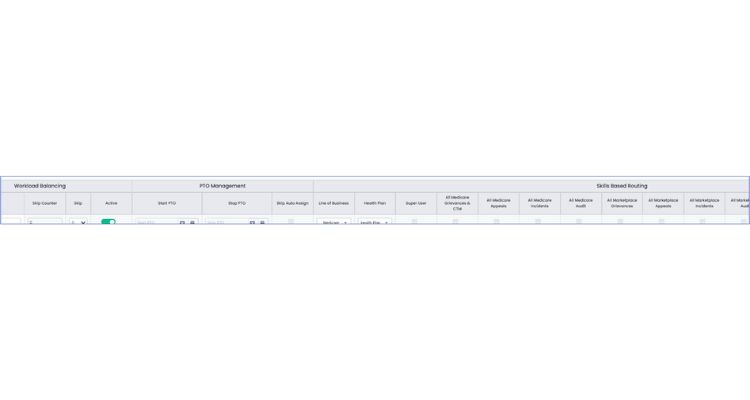
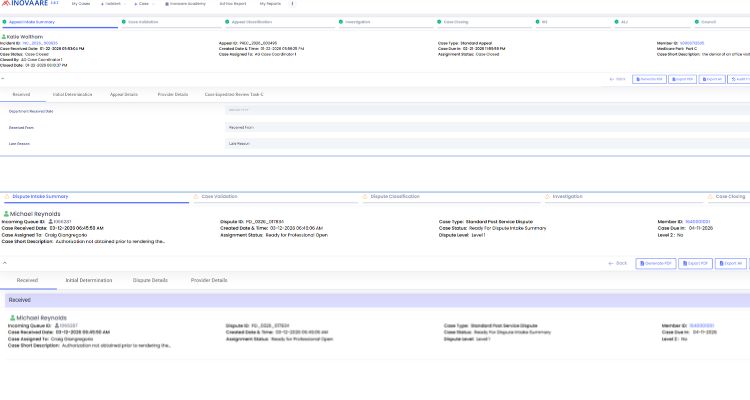
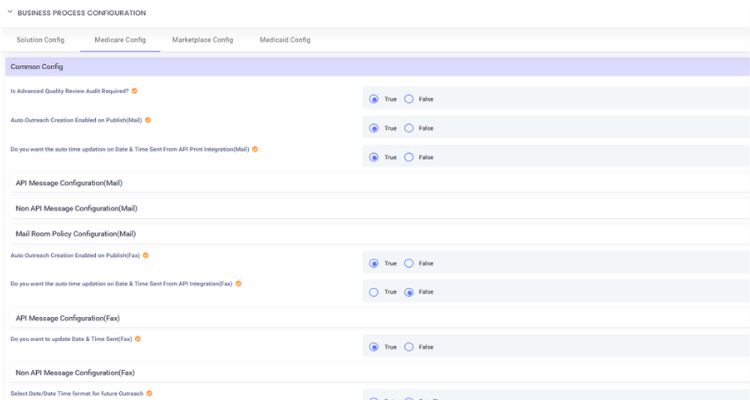
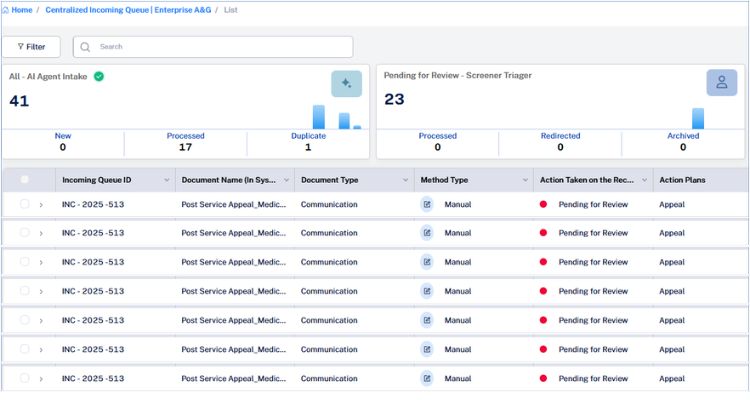

Platform capability overview
This visual anchors breadth. It shows the platform as an operating layer across workflows, quality, analytics, AI, configurability, and compliance-driven foundations.
CIO and IT questions
Make the hidden build burden visible before the program begins
These questions help keep the comparison honest. They push the decision beyond build feasibility and into long-term ownership reality.
Who owns workflow maturity after go-live. Who maintains reporting changes, compliance-driven updates, and audit requirements. How much of the roadmap will compete with other IT priorities once the platform is live.
Business users may still need IT for ongoing change. AI capabilities may require a second investment track. Support, enhancement, and governance needs often grow after deployment rather than shrink.
Are letters, workforce management, dashboards, admin tooling, audit support, security posture, hosting, and sustainment roles included in the internal scope and cost model, or only the core workflow build.
Stable operations across member and provider workflows. Leadership visibility across operations and reporting. Lower manual burden without losing oversight, quality, or defensibility.
Executive next step
When the requirement is broader than workflow automation, the decision should be broader than software selection.
Review the buy versus build choice through the lens of capability maturity, compliance resilience, reporting depth, AI readiness, and long-term ownership burden. That is where the real difference becomes visible.